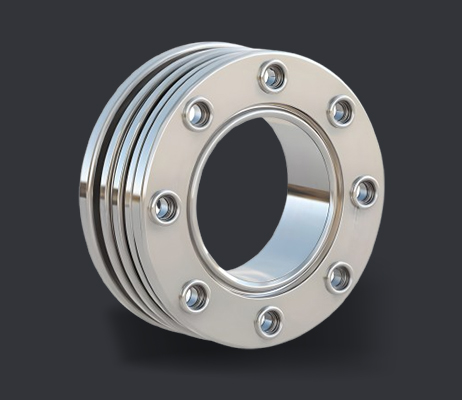
Virami Steel Hub is a trusted manufacturer, supplier, stockist, and exporter of high-quality Alloy 20 Flanges in Mumbai, India. We specialize in delivering corrosion-resistant flanges designed for demanding industrial environments, particularly in chemical processing and acidic applications.
Our Alloy 20 flanges are manufactured using premium-grade raw materials and advanced production techniques to ensure excellent dimensional accuracy, superior surface finish, durability, and long service life. We serve both domestic and international markets, including the USA, Europe, the Middle East, Africa, and Southeast Asia.
With a strong commitment to quality and performance, Virami Steel Hub ensures that every flange meets international standards and exceeds customer expectations.
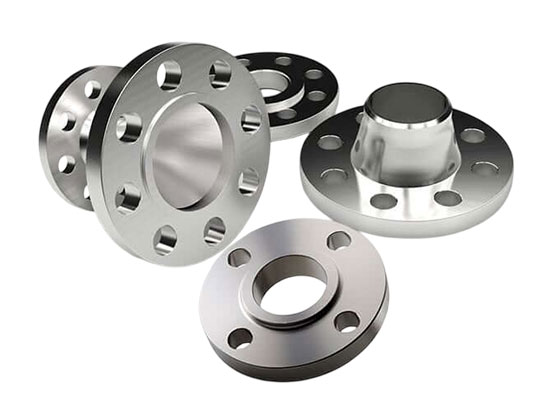
Alloy 20 flanges are high-performance piping components made from a nickel-iron-chromium alloy specifically designed to resist corrosion in harsh chemical environments. These flanges are widely used to connect pipes, valves, pumps, and other equipment in industries where corrosion resistance is critical.
Alloy 20, also known as Carpenter 20 or UNS N08020, is particularly effective in resisting sulfuric acid, phosphoric acid, and chloride-induced corrosion.
Key Functions:
These flanges are essential for applications where stainless steel may not provide adequate corrosion resistance.
Alloy 20 is a complex alloy designed to deliver exceptional corrosion resistance through its balanced composition.
Typical Composition:
Nickel enhances resistance to stress corrosion cracking, chromium provides oxidation resistance, molybdenum improves resistance to pitting, and copper enhances resistance to sulfuric acid.
Alloy 20 flanges offer several advantages that make them ideal for corrosive environments:
These features make Alloy 20 a preferred choice for chemical and processing industries.
Alloy 20 offers reliable mechanical strength for industrial applications:
These properties ensure that the material can withstand pressure, stress, and deformation without failure.
These physical properties contribute to the alloy’s performance in high-temperature and corrosive environments.
Alloy 20 flanges are specifically designed for superior corrosion resistance in aggressive chemical environments.
Highly Resistant To:
This makes Alloy 20 an excellent alternative to stainless steel in chemical processing industries.
Alloy 20 is typically supplied in the annealed condition for optimal corrosion resistance and mechanical properties.
Heat Treatment Process:
This process improves ductility and corrosion resistance.
Alloy 20 flanges offer excellent weldability and can be welded using standard techniques.
Welding Methods:
Best Practices:
Proper welding ensures strong joints without compromising corrosion resistance.
Proper machining ensures dimensional accuracy and surface quality.
Alloy 20 flanges are manufactured in compliance with international standards:
These standards ensure product quality and global acceptance.
We provide a wide range of flange types:
Surface Finish Options:
Alloy 20 flanges are widely used in industries that require high corrosion resistance.
Each Alloy 20 flange undergoes strict quality checks:
Mill Test Certificates (MTC) and third-party inspections are provided.
Alloy 20 Flanges are a highly reliable solution for industries requiring superior corrosion resistance, especially in sulfuric acid and chemical processing environments. Their excellent mechanical properties, durability, and resistance to aggressive chemicals make them a preferred choice across multiple industries.
With a focus on quality, precision, and customer satisfaction, Virami Steel Hub delivers Alloy 20 flanges that ensure long-term performance, reliability, and value in critical industrial applications.
Alloy 20 flanges are primarily used in industries that handle highly corrosive chemicals such as sulfuric acid, phosphoric acid, and chlorides. They are commonly used in chemical processing, petrochemical plants, pharmaceuticals, and food processing systems where corrosion resistance is critical.
Alloy 20 offers superior resistance to sulfuric acid and chloride-induced corrosion compared to stainless steel. While stainless steel performs well in general environments, Alloy 20 is specifically designed for aggressive chemical conditions, making it a better choice for chemical industries.
Alloy 20 is composed of nickel (32–38%), chromium (19–21%), iron (balance), molybdenum (2–3%), and copper (3–4%). This unique composition provides excellent resistance to corrosion, pitting, and stress corrosion cracking.
Yes, Alloy 20 is specifically developed to resist sulfuric acid corrosion. It performs exceptionally well in both dilute and concentrated sulfuric acid environments, making it one of the best materials for such applications.
Common types of Alloy 20 flanges include weld neck flanges, slip-on flanges, blind flanges, socket weld flanges, threaded flanges, lap joint flanges, and orifice flanges. Each type is designed for specific pressure and application requirements.
Alloy 20 flanges are available in pressure ratings ranging from 150# to 2500#, depending on the application and design requirements. Higher pressure ratings are used in demanding industrial systems.
Yes, Alloy 20 flanges offer excellent corrosion resistance, especially in environments containing sulfuric acid, chlorides, and other aggressive chemicals. They also resist pitting, crevice corrosion, and stress corrosion cracking.
Yes, Alloy 20 flanges have excellent weldability and can be welded using common methods such as TIG (GTAW), MIG (GMAW), and SMAW. Proper welding practices must be followed to maintain corrosion resistance.
Alloy 20 flanges are widely used in chemical processing, petrochemical, pharmaceutical, food processing, oil & gas, and power generation industries due to their high corrosion resistance and durability.
Alloy 20 flanges are manufactured according to international standards such as ASTM B462, ASME SB462, ANSI B16.5, and ANSI B16.47. These standards ensure quality, reliability, and compatibility.
Alloy 20 is mainly designed for corrosion resistance in chemical environments, especially sulfuric acid, while Inconel alloys are primarily used for high-temperature and extreme heat resistance applications.
Alloy 20 flanges require minimal maintenance due to their excellent corrosion resistance. Regular inspection is recommended to ensure long-term performance, especially in highly aggressive environments.
Alloy 20 flanges are typically available in sizes ranging from ½ inch to 48 inches, making them suitable for both small and large piping systems.
Yes, Alloy 20 can perform well in moderately high-temperature environments, but it is primarily designed for corrosion resistance rather than extreme heat resistance.
Virami Steel Hub offers high-quality Alloy 20 flanges with strict quality control, competitive pricing, global export capability, and custom solutions tailored to client requirements.