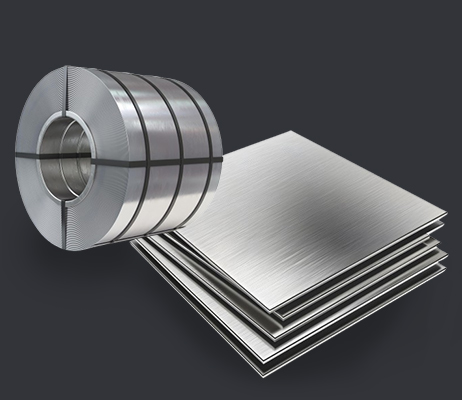

Monel 400 Plate is a nickel-copper alloy flat product used where corrosion resistance, strength and toughness are required in marine, chemical-processing and industrial service. Monel 400 Sheet is the related thinner flat-rolled form used for formed components. Both are based on Alloy 400, designated UNS N04400, and covered by ASTM B127 for plate, sheet and strip. Virami Steel supplies Monel 400 plates and sheets from Mumbai, India for industrial, OEM, EPC and project requirements. Buyers should specify product form, dimensions, condition, quantity, inspection requirements and destination when requesting material.

Monel 400 plates and sheets are flat-rolled products made from UNS N04400, a solid-solution nickel-copper alloy known for strength, toughness and resistance to many corrosive environments. ASTM B127 applies to rolled plate, sheet and strip in this alloy.
Plate and sheet are selected according to thickness, fabrication method and component design. Plate is commonly used for heavier fabricated sections, while Monel 400 Sheet suits thinner formed parts. Alloy 400 is strengthened principally by cold working rather than precipitation hardening.
The purchase specification should identify the alloy, product form, dimensions, condition and documentation requirements. ASTM B127 is the principal specification for rolled UNS N04400 plate, sheet and strip.
| Specification | Alloy 400 Plate & Sheet Details |
|---|---|
| Grade | Monel 400 / Alloy 400 |
| UNS | N04400 |
| Werkstoff | 2.4360 / 2.4361 |
| ASTM Specification | ASTM B127 |
| ASME Specification | ASME SB-127 where applicable |
| Product Forms | Plate, Sheet |
| Alloy Type | Nickel-Copper Alloy |
| Plate Thickness Range | Available as per customer requirement – confirm with Virami Steel |
| Sheet Thickness Range | Available as per customer requirement – confirm with Virami Steel |
| Width / Length | Available as per customer requirement – confirm with Virami Steel |
| Condition | Specify required hot-rolled, cold-rolled or annealed condition |
| Surface / Finish | Confirm required finish with Virami Steel |
| Cut-to-Size Availability | Confirm dimensions and availability |
| Testing / Certification | State requirements at enquiry stage |
Both are flat-rolled Alloy 400 forms, but their practical use differs. The plate form is generally specified for heavier fabricated equipment and thicker sections, while Monel 400 Sheet is commonly used for thinner-gauge fabrication, bending and formed components.
A universal thickness cutoff should not be assumed without the applicable purchase specification or mill standard. Buyers should state exact product form and thickness rather than relying only on “plate” or “sheet” terminology. ASTM B127 itself covers all three rolled forms: plate, sheet and strip.
The specified chemistry of Alloy 400 is dominated by nickel and copper with controlled limits for other elements.
| Element | Specified Content (%) |
|---|---|
| Nickel + Cobalt | 63.0 min. |
| Copper | 28.0–34.0 |
| Iron | 2.5 max. |
| Manganese | 2.0 max. |
| Carbon | 0.30 max. |
| Silicon | 0.50 max. |
| Sulfur | 0.024 max. |
This nickel-copper balance gives Alloy 400 its characteristic corrosion behaviour, toughness and usefulness in marine, chemical and process-service components.
Mechanical properties vary with product form, thickness, rolling route, annealing and cold work. Published values should therefore be treated as representative ranges rather than universal purchase limits.
| Property / Condition | Typical Published Value |
|---|---|
| Plate, hot-rolled as-rolled – Tensile Strength | 517–655 MPa |
| Plate, hot-rolled as-rolled – Yield Strength | 276–517 MPa |
| Plate, hot-rolled annealed – Tensile Strength | 482–586 MPa |
| Plate, hot-rolled annealed – Yield Strength | 193–345 MPa |
| Sheet, annealed – Tensile Strength | 482–586 MPa |
| Sheet, annealed – Yield Strength | 207–310 MPa |
| Density | 8.80 g/cm³ |
| Melting Range | 1300–1350°C |
| Thermal Conductivity at about 21°C | Approx. 22 W/m·°C |
Elongation and hardness also change with temper and processing. Final acceptance criteria should follow the ordered condition, current material standard and certified test documentation.
Procurement enquiries should define thickness, width, length, tolerance, surface and metallurgical condition. Plate may be requested in hot-rolled or annealed condition, while sheet may be specified in cold-rolled or annealed condition depending on fabrication needs.
For cut-size material, include final dimensions and tolerance. Surface, edge, flatness and inspection requirements should also be stated. Exact size ranges and processing availability should be confirmed with Virami Steel for the individual enquiry.
The plate form is used for heavier fabricated equipment exposed to compatible corrosive environments, including selected process-vessel components, marine equipment, seawater-handling assemblies, heat-exchanger components, tank sections and chemical or refinery equipment. Its strength and corrosion characteristics are useful where conventional materials may provide inadequate service.
Monel 400 Sheet is used for thinner fabricated and formed components such as covers, panels, liners, housings and sheet-metal parts. In marine service, the alloy is selected for seawater performance; in chemical equipment, selection depends on compatibility with the process medium. Suitability must consider concentration, temperature, aeration, flow and mechanical loading rather than assuming universal resistance.
These materials are specified by marine and shipbuilding companies, offshore contractors, chemical and petrochemical plants, oil and gas operators, refineries, heat-exchanger manufacturers, pump and valve manufacturers, water-treatment and desalination projects, process plants, OEMs, EPC contractors and industrial fabricators.
Purchasing criteria commonly include alloy designation, product form, dimensions, condition, corrosion environment, fabrication route and documentation requirements.
Monel 400 plate and sheet can be cut, formed, bent, welded and machined using procedures appropriate for nickel-copper alloys. Sheet suits thinner formed components, while plate is selected for heavier fabricated sections.
Fabrication procedures should consider thickness, condition and work-hardening behaviour. Welding consumables and parameters should comply with the applicable code and approved procedure. Cold working changes mechanical properties, so final condition must be considered during design and inspection.
Industrial procurement should address traceability and dimensional conformity. Requirements may include heat-number identification, chemical verification, mechanical testing, thickness measurement, width and length inspection, surface examination, flatness checks and mill documentation. ASTM B127 addresses chemical and mechanical requirements as well as dimensional characteristics for the covered flat products.
Any requirement for PMI, third-party inspection or supplementary testing should be stated before ordering and confirmed for availability. Documentation should follow the applicable ASTM, ASME or project specification.
Virami Steel, based in Mumbai, supplies Monel 400 plates and sheets for industrial, OEM, EPC, fabrication, replacement and project requirements across India and international markets.
Domestic and export enquiries may include plate or sheet requirements, quantity, surface condition, fabrication needs and documentation. For project sourcing, specifying ASTM B127 or the applicable ASME requirement supports clear technical and commercial review.
Provide UNS N04400, ASTM B127 or the applicable ASME specification, product form, thickness, width, length, quantity, condition, surface requirement, cutting requirement, testing or documentation needs, and delivery destination.