
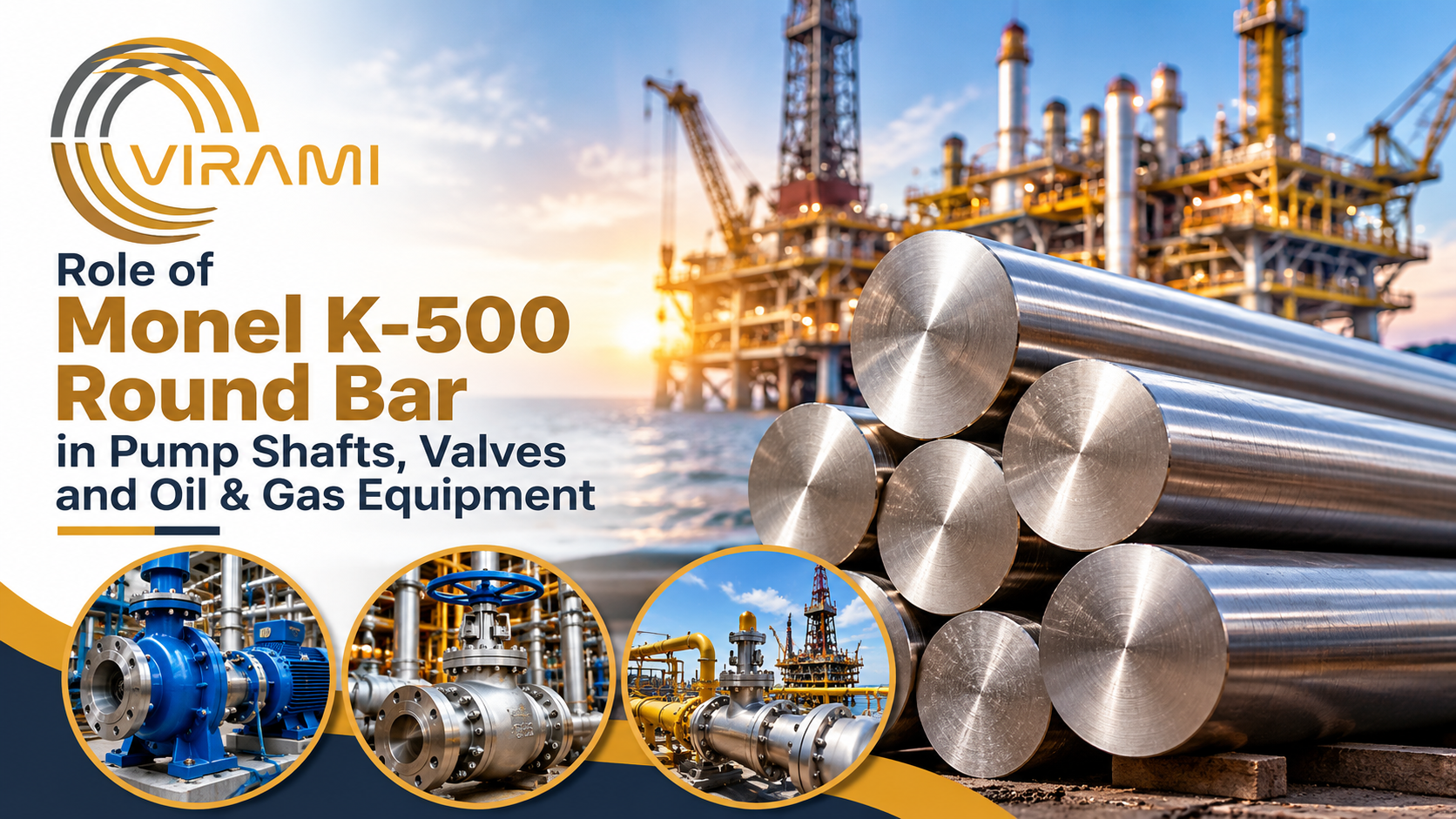
Industrial pumps, valves and oilfield equipment often operate under demanding conditions involving seawater, pressure, mechanical loading and corrosive fluids. Choosing the wrong material can lead to premature shaft damage, leaking valve assemblies or unexpected maintenance. Monel 500 Round Bar is frequently considered for components that need both corrosion resistance and higher mechanical strength.
The material is more precisely known as Monel K-500 (UNS N05500), a precipitation-hardenable nickel-copper alloy. Understanding its properties and limitations helps engineers and procurement teams select suitable bars for industrial applications in 2026.
Monel K-500 Round Bar is a nickel-copper alloy strengthened through controlled additions of aluminium and titanium. Appropriate heat treatment produces fine strengthening precipitates within the metal, improving hardness and yield strength compared with annealed Monel 400. Its general corrosion resistance resembles that of Monel 400, although the age-hardened condition can be more susceptible to cracking in particular environments.
Round bars are supplied as cylindrical stock for machining pump shafts, valve stems, fasteners, marine hardware and oilfield components. Dimensions, delivery condition and testing requirements should be specified before purchase.
| Element | Composition by weight |
|---|---|
| Nickel plus cobalt | 63.0% minimum |
| Copper | 27.0–33.0% |
| Aluminium | 2.30–3.15% |
| Titanium | 0.35–0.85% |
| Iron | 2.0% maximum |
These are selected composition limits for UNS N05500, not a complete inspection specification. Verify the full chemistry against the applicable material standard and mill certificate.
Pump shafts transfer rotational power from the motor or drive system to the impeller. They face torsional forces, cyclic loading, vibration, and contact with bearings or sealing components. In marine and chemical processing systems, corrosion adds another engineering challenge.
An appropriately age-hardened Monel K-500 shaft can provide the strength needed for selected high-load applications. Engineers should calculate shaft diameter, operating speed, deflection and fatigue demands instead of relying on alloy strength alone. Poor alignment, severe vibration or unsuitable bearing design can still shorten service life.
Monel K-500 has established applications in centrifugal pump shafts exposed to flowing seawater. Its combination of useful corrosion resistance and strength can be advantageous in marine equipment. However, stagnant seawater, deposits and crevices may still create localised corrosion concerns, so water conditions and maintenance practices matter.
Shaft manufacturers may require turned or centreless-ground bars to achieve suitable machining allowances. Confirm straightness, diameter tolerance, surface finish and the intended heat-treatment sequence. Machining can change residual stresses, making process planning important for precision rotating parts.
Industrial valves regulate flow and pressure in chemical plants, marine systems and oil and gas facilities. Their internal components require suitable mechanical strength, resistance to process fluids and reliable movement during operation.
Monel K-500 may be selected for valve stems, trim and other mechanical parts exposed to demanding fluids. A valve stem must resist bending, torsion and repeated actuation without compromising sealing performance. Surface condition, dimensional tolerances and compatibility with packing materials are equally important.
The alloy is also used for selected corrosion-resistant fasteners and springs. Age hardening can improve strength, but designers must specify the condition and consider installation stresses, fatigue and potential cracking. Material substitution without engineering verification is not advisable.
Corrosion resistance does not automatically guarantee freedom from galling or wear. Sliding valve parts may need carefully chosen mating materials, clearances, surface finishes or coatings. Actual process chemistry, operating temperature and mechanical contact should guide selection.
Oil and gas installations expose materials to combinations of pressure, temperature, saline water, gases and mechanical loading. Monel K-500 has been used in oil-well tools, drill collars, instruments, pump components and selected valve hardware.
Its strength and corrosion resistance can make it useful for qualifying specific downhole or offshore parts. Yet performance depends on the fluids present, temperature range, operating loads and any imposed cathodic protection. A successful marine application does not automatically qualify the same bar for an oilfield environment.
Hydrogen sulphide exposure, cathodic protection and sustained tensile stress require particular care. Research documents hydrogen-assisted cracking of Monel K-500 in some service conditions. Buyers must not interpret general corrosion resistance as unrestricted sour-service approval. Check applicable ISO 15156/NACE MR0175 requirements, hardness limits, component specifications and relevant qualification evidence with a corrosion specialist.
When properly selected and manufactured, suitable alloy components can help reduce corrosion-related repairs. Reliability still depends on correct design, installation, inspection and maintenance. Material choice is one part of lifecycle performance, not a substitute for operating controls.
Several characteristics explain the use of this nickel-copper alloy in demanding industrial components:
These benefits are application-dependent. Hardness, ductility, tensile properties and corrosion behaviour change with processing and service conditions.
Before placing an order, specify the full material identity, size and required condition. The relevant product standard is ASTM B865-25, covering precipitation-hardening nickel-copper-aluminium alloy UNS N05500 bars, rods, wire and forgings. The order should identify any additional project or equipment specifications.
For pump shafts, provide finished dimensions, tolerances, surface finish, machining allowance and any nondestructive testing requirements. For valves, describe the pressure rating, process fluid, stem design and expected actuation loads. For oilfield equipment, state environmental qualification requirements before accepting material.
Request a mill test certificate showing heat number, chemistry, mechanical properties and heat-treatment condition. Where appropriate, specify hardness testing, positive material identification and third-party inspection. Confirm that the certificate can be traced to the actual bars supplied.
Purchasing teams can avoid confusion by preparing a consistent request for quotation. Include these details before approaching a supplier:
Ask for written confirmation of any proposed substitution. This simple review helps technical and purchasing teams compare offers on the same basis and reduces the risk of ordering unsuitable material.
When evaluating Monel 500 Round Bars Manufacturers in Mumbai, check whether the company manufactures the original bar, processes imported mill material or acts as a stockist. Ask about ASTM B865 compliance, available diameters, heat treatment and inspection capabilities. Accurate descriptions are more valuable than generic manufacturing claims.
Monel 500 Round Bar Suppliers in Mumbai should be able to clarify stock availability, cut-to-length options, material condition, certificates and realistic dispatch schedules. For repeat orders, consistent sourcing and reliable batch traceability help minimise procurement problems.
Monel 500 Round Bar Exporters in Mumbai should also support export packing, marking, commercial documentation and destination-specific material requirements. Compare technical compliance, responsiveness and total delivered cost rather than judging quotations by price alone.
Monel K-500 contains aluminium and titanium, which allow precipitation hardening and higher strength. Both are nickel-copper alloys, but their processing conditions and mechanical properties differ.
Its combination of mechanical strength and corrosion resistance can suit selected pump shafts, particularly in marine service. Final suitability depends on shaft loads, seawater conditions and the equipment design.
No. Hydrogen-assisted cracking and sour-service restrictions can be important. Qualification must reflect the exact environment, applicable standards, material condition and component stresses.
ASTM B865-25 covers UNS N05500 bar and related product forms. Buyers should also confirm drawing requirements, delivery condition and any project-specific qualifications.
Monel 500 Round Bar plays an important role in selected pump shafts, valves and oil and gas components because it combines corrosion resistance with age-hardenable strength. Its practical value depends on sound engineering, correctly specified material condition and verified quality documentation.
For project enquiries, share your grade, bar diameter, drawings, operating conditions and test requirements with Virami Steel. Detailed specifications help assess sourcing options and prepare accurate quotations for demanding industrial applications.
