
The continuous advancement of manufacturing depends heavily on materials which determine the quality attributes alongside strength and operational performance of final products. Stainless steel stands out as the most frequently chosen material because it shows outstanding strength together with corrosion resistance and broad functionality. Two key industrial forms of stainless steel material – bars and wires demonstrate high importance in today’s manufacturing sector as they provide essential structural elements for countless industries.
The notable characteristic of Inconel 825 involves its remarkable capacity to withstand corrosion when exposed to harsh settings. The material proves to be an excellent solution for manufacturing operations in chemical processing as well as petrochemical production together with marine usage. The material exhibits perfect suitability for operating within these conditions:
This article examines stainless steel bars and wires’ multiple applications in modern manufacturing together with their important industrial attributes which make them essential in contemporary industries.
One must first understand stainless steel bars and wires distinctive aspects in modern manufacturing operations before discussing their applications. Stainless steel exists as a high-performance metal combination which primarily contains iron grains with carbon and chromium elements and optional nickel and molybdenum parts. The core corrosion resistance property of stainless steel results from its chromium content between 10-30%. Such resistance properties qualify stainless steel for utilization in industries dealing with moisture and chemical exposure and extreme climate conditions.
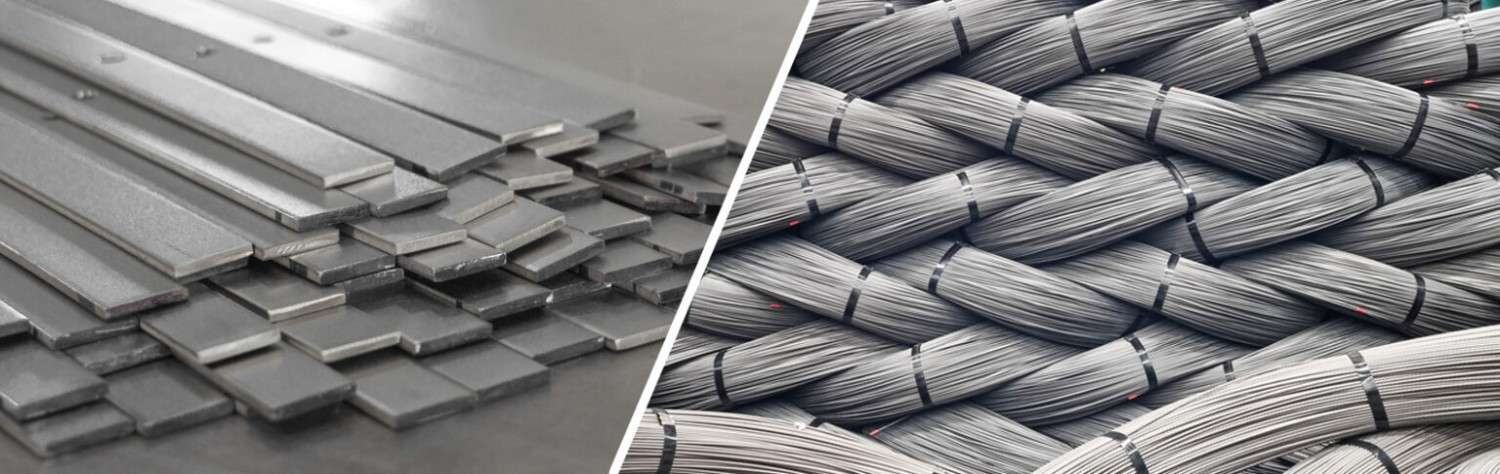
Stainless steel bars together with wires find application because they possess toughness and adaptability and maintain stability in harsh climatic conditions. Stainless steel products in bar forms as well as wires show supreme durability with resistance to wear and tear due to their round, square, hexagonal shapes and slender sizes.
Stainless steel bars prove critical to automotive production because this industry depends on durable performance of engineered components. The automotive industry frequently applies stainless steel bars to manufacture components like engine parts as well as exhaust systems and shafts and gears. stainless steel proves its worth because it naturally resists corrosion to protect automotive components operating in extreme heat and enduring multiple exposure environments which include rain snow and road salt.
Aerospace and Defence:
The aerospace and defence sectors extensively use stainless steel bars for building components whose operational success depends on precise design and ultimate reliability. Aircraft frames along with landing gears and turbine blades receive their construction from stainless steel material because they need both strong tensile properties and corrosion resistance.
Stainless steel excels in high-pressure applications and temperature-stable environments thus providing essential material value to critical industries. The production of missiles and defence systems incorporates stainless steel bars because of their desirable strength-weight proportion.
Construction And Infrastructure:
Construction applications heavily rely on stainless steel bars when designing reinforced concrete structures. Stainless steel reinforcements in the form of rebar play an essential role in modern construction because they deliver extended service quality against moisture and temperature changes and chemical exposure.
Stainless steel functions as an ideal choice for concrete reinforcement because it needs minimal maintenance while resisting corrosion thus it extends structural lifespans in harsh environments like coasts.
Due to their strengths such as durability and flexibility and corrosion resistance and high mechanical strength stainless steel wires find critical applications across multiple industries. Stainless steel wires have broad industrial applications because of their multiple advantageous characteristics. Stainless steel wires stand as essential elements that manufacturers require to make essential components for multiple business sectors through their properties which include strength and flexibility and durability and corrosion resistance. The main uses of stainless steel wires for manufacturing will be discussed in detail in the following sections.
Automotive Industry:
The automotive industry depends on stainless steel wires because they provide essential strength and reliability in its operations. The main uses of stainless steel wires appear in the following sequence:
Vehicles use stainless steel wires to build brake lines as well as brake cables together with additional control cables. These components maintain both safety and operational functionality under all weather conditions because of their anti-corrosive properties particularly in contact with moisture or salts or chemicals.
Suspension systems use wires to maintain strength characteristics as well as elastic capabilities throughout these components despite applied stresses.
Exhaust Systems use stainless steel wires because they maintain their structured form under extreme heat environments.
The mechanisms that release airbags together with the construction of seatbelts utilize stainless steel wires since their strength and durability play a vital role in passenger safety.
Aerospace Industry:
Stainless steel wires meet all requirements of the aerospace sector by maintaining their lightweight nature while providing strength as well as exhibiting corrosion resistance. The following uses of stainless steel wires exist in aerospace production:
Production aircraft rudder elevator and aileron control mechanisms utilize stainless steel wire constructions in their control system assembly. Under flight conditions of high stress stainless steel maintains both high flexibility and strength characteristics needed for precise control and durable operations.
The landing gear systems incorporate stainless steel wires as key components because they need to exhibit strength properties while resisting both fatigue damage and corrosive harm.
In turbine engines stainless steel wires are utilized to make parts capable of operating within extreme temperatures and recurring mechanical strain.
Electrical Industry:
The electrical and electronics sectors use stainless steel wires because they preserve electrical conductivity while showing good resistance to corrosion elements. Key applications include:
Electrical wires specifically need stainless steel materials as their base because corrosive conditions and temperature extremes demand this material selection. Businesses utilize stainless steel wires to wire electrical systems both outside and inside industrial facilities.
The core element of coaxial cables includes stainless steel wires because they provide durability together with excellent transmission performance and minimal signal degradation.
The production of electrical connectors alongside terminals requires stainless steel wires since they match conductivity with environmental resistance properties.
Construction and Structural Applications:
Construction projects depend on stainless steel wires as reinforcement material components to strengthen their infrastructure structures. Some examples include:
The implementation of stainless steel wires functions as a core reinforcement material for both building constructions and bridges together with infrastructure installations. Buildings constructed from stainless steel resist corrosion effectively thus they maintain their structural strength and integrity under harsh environmental conditions.
Stainless steel wires represent an indispensable component for making construction ropes and cables that both support lifting operations and facilitate rigging work and exhibit structural roles. Stainless steel wires are crucial elements used in cranes and lifts and suspension bridges because they demonstrate high performance capabilities.
Stainless steel wires serve multiple purposes including tendon applications that hold up fabric-roofed facilities through tensile structures. The required tension needed to maintain these structures is provided by stainless steel wires that specifically support large sports facilities as well as exhibition spaces plus outdoor areas.
Stainless steel wires are a necessity in today’s production, as there is a great deal of variety and quality available, which makes them suitable for any industry. The characteristics of stainless steel make it resistant to wear and tear, durable, and corrosion-resistant, through which steel industries offer their best services. The material is used for the construction of medical devices, automotive and aerospace parts, and electronics and can replace the hard-to-find precision components. The reason why stainless steel is the material of choice worldwide is its sustainability, non-corrosiveness, and the strength of stainless steel that help protect the environment. The various applications of stainless steel wires in manufacturing range from structural integrity and safety to aesthetic appeal and there is no one in the world that can perform these services for any industry of any size better than this material.
