
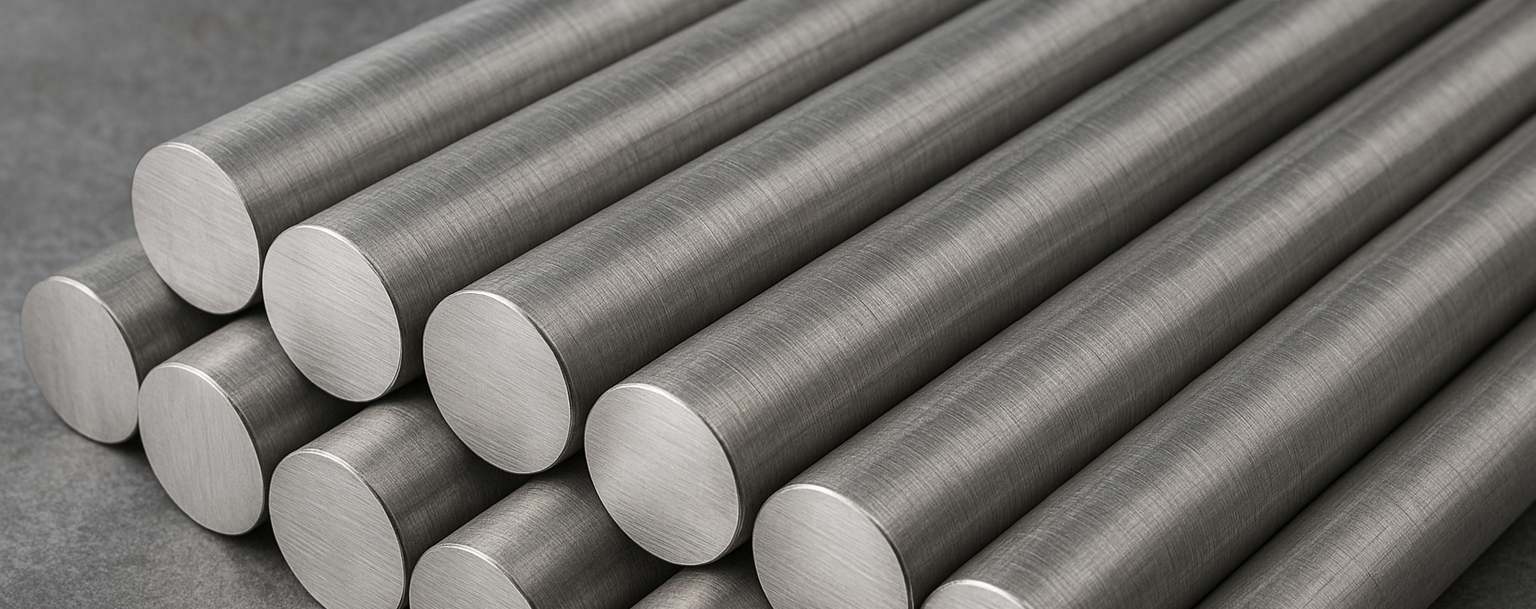
Hastelloy is a superalloy in the real meaning of the word when it comes to materials capable of withstanding the most extreme conditions in the industrial environment. Hastelloy bars are commonly credited with extraordinary resistant properties to corrosion, high temperatures, and mechanical stresses and therefore, a favorite by industries in which failure is unacceptable.
However, exactly why are Hastelloy bars so special, and why can they be considered the epitome of choice in some of the most challenging conditions on earth?
Hastelloy is a registered brand of a line of corrosion-resistant alloys between metals that are basically made up of nickel with a combination of molybdenum, iron, cobalt, and chromium. These alloys are designed to operate within very aggressive environments—those full of acids, heat, or oxidizing agents.
There are some of the most commonly utilized grades which are:
All grades are customized to address certain issues but with all of them bearing the hallmark properties defined as the superalloy definition of Hastelloy.
The Hastelloy bars are well recognized due to their resistance to corrosion in one of the most chemically harsh destinations—hydrochloric acid, sulfuric acid, and chlorine gas. Hastelloy does not lose its structure and properties as it may occur when using stainless steel after long-term exposure to external factors.
That is why it is ideal to be used in:
Some grades such as Hastelloy X can resist oxidation and maintain mechanical strength at temperatures above 1200°C (2200°F). This is the reason why Hastelloy bars are hugely employed in:
Hastelloy can be easily machined, welded, and cast compared with most other high-performance alloys, even though it is still quite difficult to machine. This implies that it can be given any desired shape such as bars, rods, and tubes or bespoke pieces, without sacrificing its main characteristics.
4. Resistance to Pitting and Crevice CorrosionLocalized corrosion, which could include pitting or crevice corrosion, is one of the greatest hazards in both marine and chemical environments. Hastelloy bars, in particular grades such as C-22, provide excellent corrosion protection in such cases, better than titanium or stainless steel in a lot of instances.
Hastelloy bars are often detected in:
Hastelloy bars do not only have the strength, but they are also designed to survive the extreme. It is hard to resist acid solutions, hot steam at high pressure, and fiery heat, but Hastelloy does provide a performance which cannot be matched by many other alloys. Hastelloy is a tried and tested solution in industries whose safety, longevity, and performance cannot be compromised.
