
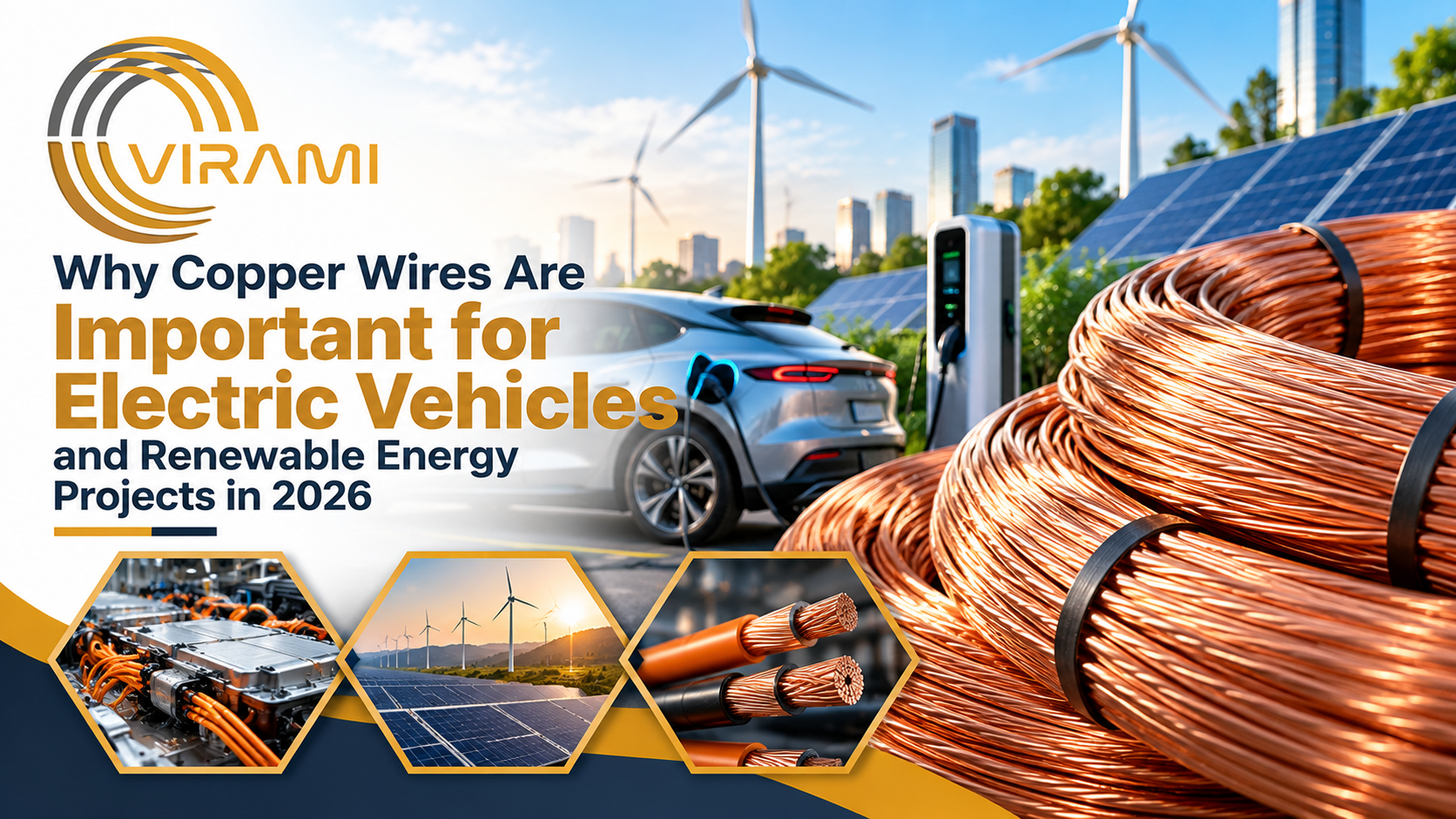
Electric vehicles (EVs), solar installations, wind farms, and battery storage systems all depend on dependable electrical connections. Behind these technologies, Copper Wires perform a vital task: carrying electricity between equipment with relatively low resistance. Their conductivity and flexibility make them a widely used conductor material.
In 2026, rising electrification is increasing attention on conductor quality and sourcing. The International Energy Agency’s Global Critical Minerals Outlook 2026 projects that copper demand will grow substantially through 2040, supported by electricity networks and new energy technologies. Understanding their applications helps engineers select suitable wires.
Copper Wires are electrical conductors made by drawing copper into specified diameters. They can be supplied as individual solid wires or combined into stranded conductors, including Commercial Grade Copper Wires. Depending on their purpose, they may be bare, tinned, enamelled, or incorporated into insulated cables.
Copper conducts electricity efficiently because of its low electrical resistivity. It also offers useful ductility, enabling wires to be drawn, bent, and assembled into different configurations. However, wire quality, conductor size, operating temperature, insulation, and connection design all affect performance. Copper does not eliminate electrical losses, and the correct design remains essential.
An EV contains multiple electrical systems that move energy from the charging connection to the battery, and from the battery to the motor. Copper appears in many of these systems because efficient power transfer is important for driving performance and thermal management.
High-voltage cables and selected internal electrical connections carry current between the battery pack, inverter, charging equipment, and other vehicle systems. Correctly sized copper conductors help manage resistance and the heat produced by current flow. Designers must consider routing, vibration, and temperature.
Not every battery-related copper component is a wire. Copper foil used as a battery current collector, for example, is a different product with different manufacturing specifications.
Motor windings commonly use enamelled copper conductors to create electromagnetic fields. Their geometry, insulation, and winding design influence motor efficiency. Inverters and related power electronics also rely on suitable electrical interconnections, although some are made as busbars rather than conventional round wires.
Charging cables must safely handle their rated currents while withstanding repeated handling and environmental exposure. Copper's conductivity and the flexibility of properly stranded conductors make it useful here. Insulation, shielding where required, temperature ratings, and connector quality are just as important as the conductor material.
Renewable electricity must travel through conductors before it can power equipment, enter batteries, or reach the grid. Copper is used at several points in this process, but the type and quantity depend on the system design.
Solar systems use conductors to connect equipment such as modules, combiner boxes, inverters, and distribution panels. Appropriate copper wiring can support efficient current transfer when conductors are selected for the voltage, current, route length, and installation environment.
Outdoor solar cables need suitable insulation and protection against ultraviolet exposure, moisture, and heat. Standard indoor building wire is not automatically suitable for exposed photovoltaic applications.
Wind turbines contain generators, electrical controls, and power-conversion equipment. Copper winding conductors and cables contribute to transferring generated power and operating internal systems. Some installations experience vibration, movement, and difficult maintenance access, making reliable termination and mechanically appropriate cable construction important.
Battery energy storage systems use electrical cables to connect battery racks, conversion equipment, and protection systems. Distribution networks also use copper in selected cables, transformers, and equipment connections, alongside aluminium and other conductor options. Choosing copper should follow an engineering comparison, not an assumption that one material fits every project.
Before purchasing, engineers should prepare an electrical and mechanical specification. The following factors are particularly important for EV and renewable-energy applications:
| Selection factor | What buyers should check |
|---|---|
| Conductor size | Current, voltage drop, cable length, and installation conditions |
| Wire construction | Solid, stranded, or fine-stranded based on flexibility requirements |
| Surface treatment | Bare, tinned, or enamelled copper as required by the application |
| Insulation | Voltage rating, heat resistance, moisture exposure, and flame requirements |
| Mechanical conditions | Vibration, bending, abrasion, and installation constraints |
| Verification | Test results, product marking, applicable standards, and traceability |
Correct conductor sizing requires more than choosing the highest possible current rating. Engineers must also check voltage drop, short-circuit withstand, thermal limits, protective devices, and any vehicle- or project-specific requirements.
For corrosion-prone or humid settings, tinned copper may be considered where the cable design specifies it. Tinning does not replace waterproof connectors or appropriate insulation. For motor windings, enamel coating has a different purpose: it electrically separates adjacent turns.
Specifications distinguish an electrical-grade product from an unverified wire shipment. ASTM B3-13(2024) covers soft or annealed bare copper wire for electrical purposes. ASTM B8 addresses certain concentric-lay-stranded copper conductors, while IEC 60228:2023 defines conductor sizes and resistance requirements for various insulated power cables.
These references are not interchangeable certifications for finished EV or solar cables. Complete cable assemblies may require additional standards covering insulation, fire performance, environmental exposure, and application-specific testing.
Ask suppliers for relevant test reports, conductor size, resistance measurements, material details, and batch identification. Where important, establish acceptance criteria for delivery inspection before placing an order.
Companies evaluating Copper Wires Manufacturers in Mumbai should confirm whether a business draws and processes wire, makes complete cables, or distributes material from other producers. These operations offer different capabilities.
Copper Wires Suppliers in Mumbai can be assessed for available conductor constructions, sizes, lead times, testing records, and support for repeat orders. Clear specifications prevent unsuitable substitutions.
For international projects, Copper Wires Exporters in Mumbai should be evaluated for protective packaging, consistent documentation, agreed testing, and compliance with destination-market requirements. A low purchase price does not compensate for unsuitable conductor material, damaged reels, or missing traceability.
The importance of copper extends beyond individual EVs and renewable projects. Expanding charging infrastructure, electricity networks, and energy storage increases demand for many types of conductors and electrical equipment.
The IEA's 2026 outlook identifies copper as a material with substantial projected demand growth and warns of potential supply shortfalls by 2035 under its stated assumptions. For buyers, the practical lesson is to plan procurement, qualify suitable sources, and reduce avoidable waste. Availability and prices still vary by product.
Improved cable routing, accurate sizing, responsible recycling, and well-documented procurement can help projects use material efficiently without compromising electrical safety.
They offer low electrical resistance and can be manufactured into conductors suited to motors, cables, and power connections. Safe performance also depends on insulation, sizing, and installation quality.
Yes. They are used in selected electrical connections, cables, equipment, and generator windings. Selection depends on the system.
Neither is universally better. Stranded constructions are often preferred where bending or movement matters, while solid wire can suit appropriate fixed installations.
Confirm conductor dimensions, resistance requirements, construction, coating, insulation where applicable, test documentation, quantity, and delivery conditions.
Yes, when properly refined and processed material meets the applicable chemical, electrical, and product specifications. Recycled origin does not establish suitability.
Copper Wires remain important to electric vehicles and renewable energy because they help deliver electrical power through motors, charging systems, solar equipment, and grid connections. Their performance comes from the right combination of conductor quality, insulation, sizing, and reliable installation.
In 2026, project teams should focus on clear technical requirements, verified material documentation, and dependable sourcing. These steps support efficient systems, manageable maintenance costs, and long-term reliability as electrification continues to expand.
Whether you’re working on electric vehicles, solar energy systems, or other electrical applications, choosing the right copper wires is essential. Contact Virami Steel Hub to discuss your requirements, product specifications, and availability.
Contact Us today for product enquiries and quotations.
