When it comes to harsh offshore environments and subsea operations, where equipment is subjected to the worst of marine abuse, material performance can either run a project or sink the project. Monel is but one alloy which has shown its value in such arduous settings, especially in the form of Monel bars.
Monel bars are highly resistant to corrosion, mechanically strong, and durable; these properties make it the best solution to use in offshore installations and subsea equipment. Nevertheless, what is the special feature about this nickel-based alloy which makes it so favorable in marine terms?
Monel is a family of nickel-copper alloys with Monel 400 and Monel K500 being the most commonly known alloy grades. Monel is an alloy made mostly out of nickel (about 63 percent) and copper (about 30 percent). The other levels include minor proportions of iron, manganese, carbon, and silicon.
These are alloys whose main attraction lies in:
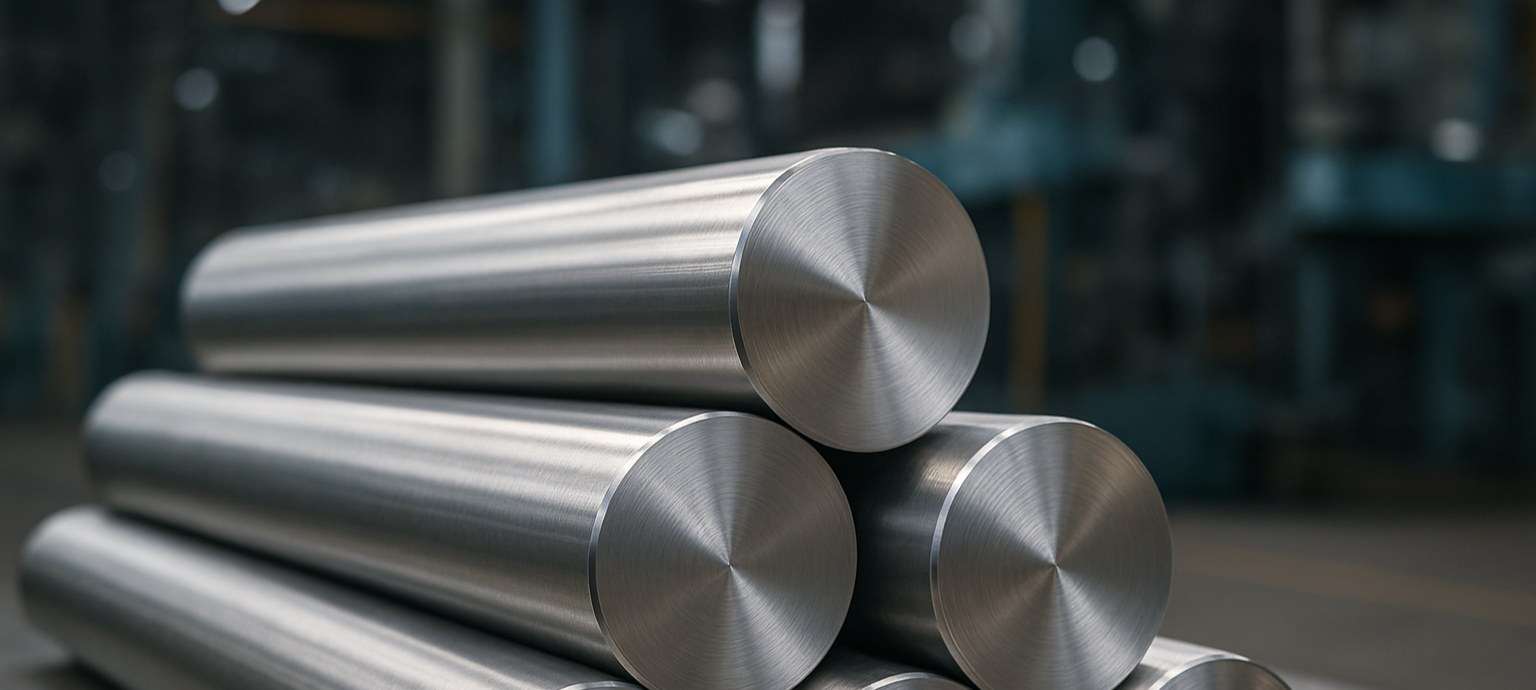
Monel bars are produced in many different circular diameters and lengths, and can be employed as fasteners and shafts, and as parts of pumps, structures, and other facilities in offshore settings.
Even with prolonged exposure to seawater, Monel is practically corrosion-free. Monel is exceptionally resistant to pitting and crevice corrosion compared to a large number of stainless steels, and therefore, is perfectly suited to:
This resistance is even applicable to both motionless and moving flows of seawater.
2. Superior Strength and ToughnessMonel bars have superior strength, particularly in Monel K500 that is age-hardened to enhance hardness and tensile strength. These mechanical behaviors are very important in:
Monel K500 is about twice as strong as Monel 400, and hence suited to critical fasteners and shafts.
3. Resistance to Stress Corrosion CrackingStress corrosion cracking (SCC) is one of the greatest threats in marine and offshore settings. Monel has very strong SCC resistance owing to its nickel-heavy makeup, particularly when it is in a high-chloride medium such as seawater.
This provides Monel bars as a safer, long-term alternative to other stainless steels, especially on deep-sea oil and gas applications.
4. Good Weldability and MachinabilityMonel bars are comparatively simple to weld and machine; this enables them to be fabricated into bespoke items that are used in complex subsea equipment. Although it is a difficult material, it is hot- and cold-workable which is necessitated in specific bespoke offshore platforms or sub-sea pipeline components.
Monel bars perform flawlessly in the subsea and offshore environment where the tolerance of any failure in material is beyond minimal. Whether the threat is aggressive saltwater corrosion, pressure, or mechanical stress, Monel time and again shows that it is designed to perform in the deep.
Whether it be offshore platforms, undersea pipeline systems, or other high-performance marine parts, Monel bars are a sure thing to last a great deal of time.
